
Understanding JVM, JDK, and JRE is the foundation of Java. Many developers learn Java syntax but don’t fully understand how Java actually runs behind the scenes.
This guide will give you a clear, practical, and real-world understanding of Java architecture.
🔹 Why This Topic Matters
When you write Java code, it doesn’t directly run on your system like C or C++. Instead, Java uses a layered architecture that ensures:
- Platform independence
- Security
- Performance optimization
👉 That’s where JVM, JRE, and JDK come into play.
🔹 Quick Overview (Before Deep Dive)
| Component | Full Form | Purpose |
|---|---|---|
| JVM | Java Virtual Machine | Runs Java bytecode |
| JRE | Java Runtime Environment | Provides environment to run Java |
| JDK | Java Development Kit | Tools to develop Java programs |
👉 Think of it like this:
- JDK → For Developers (Build)
- JRE → For Running Programs
- JVM → Executes Code
🔹 How Java Program Actually Runs
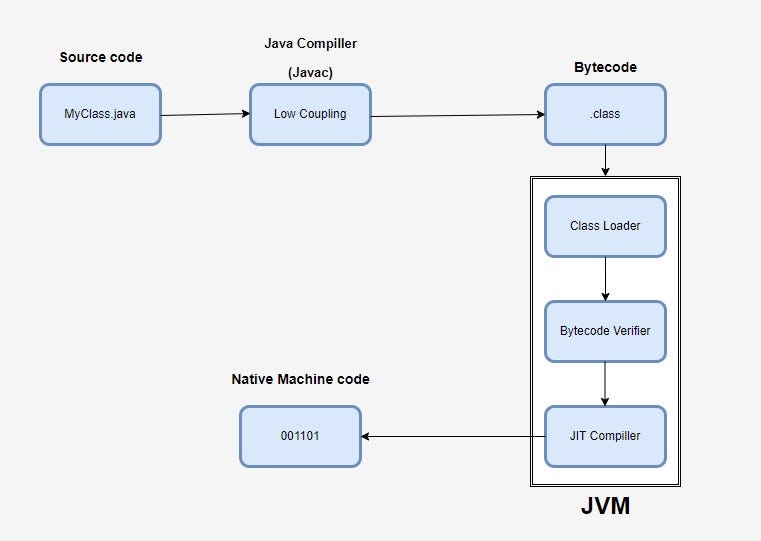

Step-by-Step Flow:
- Write Java code (
.java) - Compile using
javac(part of JDK) - Converts into bytecode (.class)
- JVM executes bytecode
- Output is generated
👉 This is the reason Java is platform independent.
🔹 What is JVM (Java Virtual Machine)?
The JVM is the heart of Java. It is responsible for executing Java programs.
👉 It converts bytecode → machine code and runs it.
🔸 Key Responsibilities of JVM
- Loads class files
- Verifies bytecode
- Executes code
- Manages memory
- Handles garbage collection
🔸 Internal Architecture of JVM
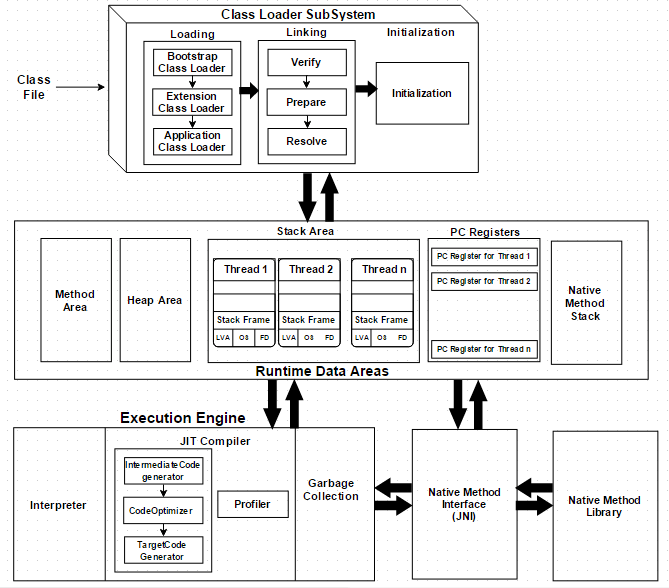

1. Class Loader Subsystem
- Loads
.classfiles into memory - Divided into:
- Bootstrap ClassLoader
- Extension ClassLoader
- Application ClassLoader
2. Runtime Data Areas (Memory)
- Heap → Stores objects
- Stack → Method execution
- Method Area → Class metadata
- PC Register → Tracks instruction
- Native Method Stack → Native calls
3. Execution Engine
- Interpreter → Executes line by line
- JIT Compiler → Converts frequently used code into native code
👉 Improves performance significantly.
4. Garbage Collector
- Automatically removes unused objects
- Prevents memory leaks
🔹 What is JRE (Java Runtime Environment)?
JRE provides everything needed to run Java applications.
👉 It includes:
- JVM
- Core libraries
- Supporting files
🔸 Role of JRE
- Executes Java programs
- Provides runtime libraries
- Ensures platform independence
👉 Without JRE, you cannot run Java programs.
🔹 What is JDK (Java Development Kit)?
JDK is a complete package for Java developers.
👉 It includes:
- JRE
- Development tools
🔸 Important Tools in JDK
| Tool | Purpose |
|---|---|
| javac | Compiles Java code |
| java | Runs Java program |
| javadoc | Generates documentation |
| jar | Packages files |
| jdb | Debugging |
🔹 Relationship Between JVM, JRE, and JDK
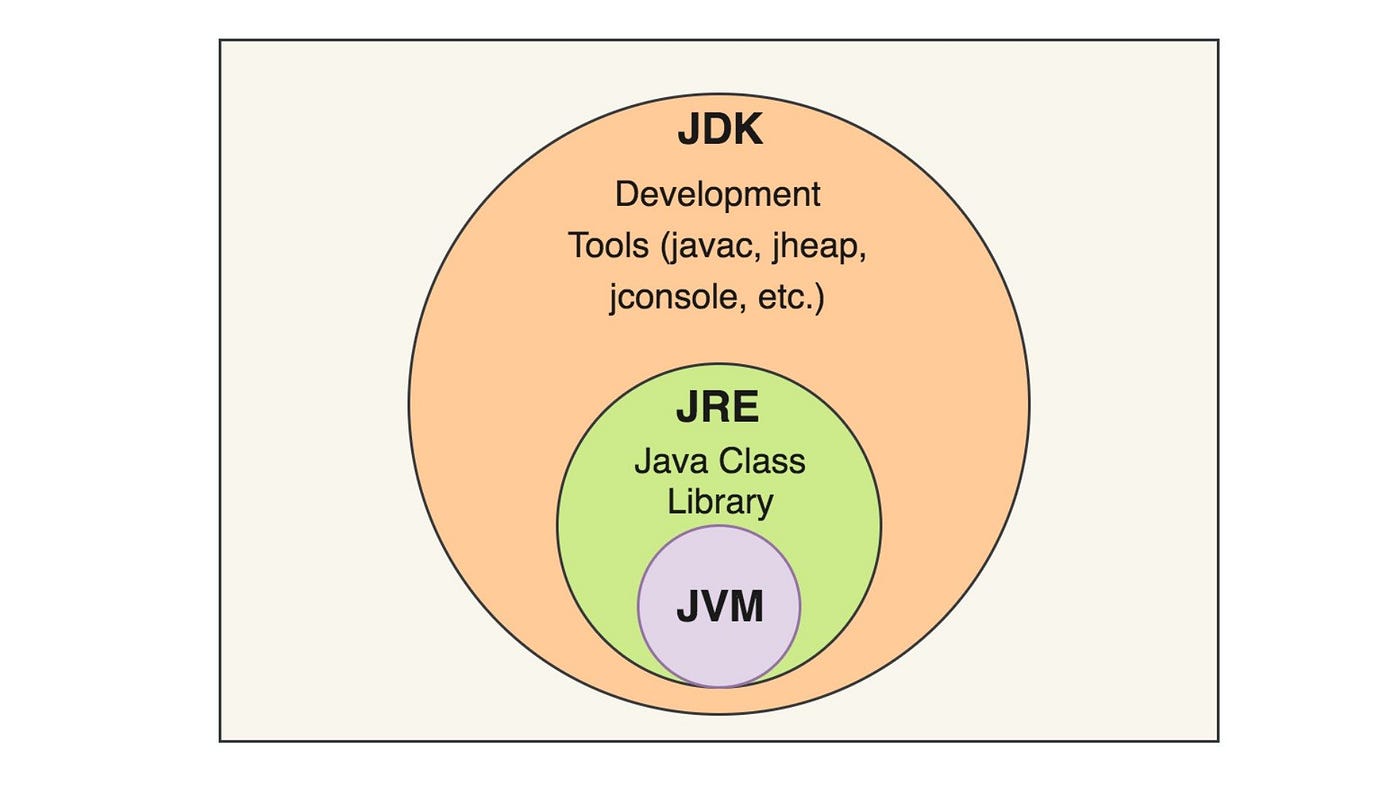
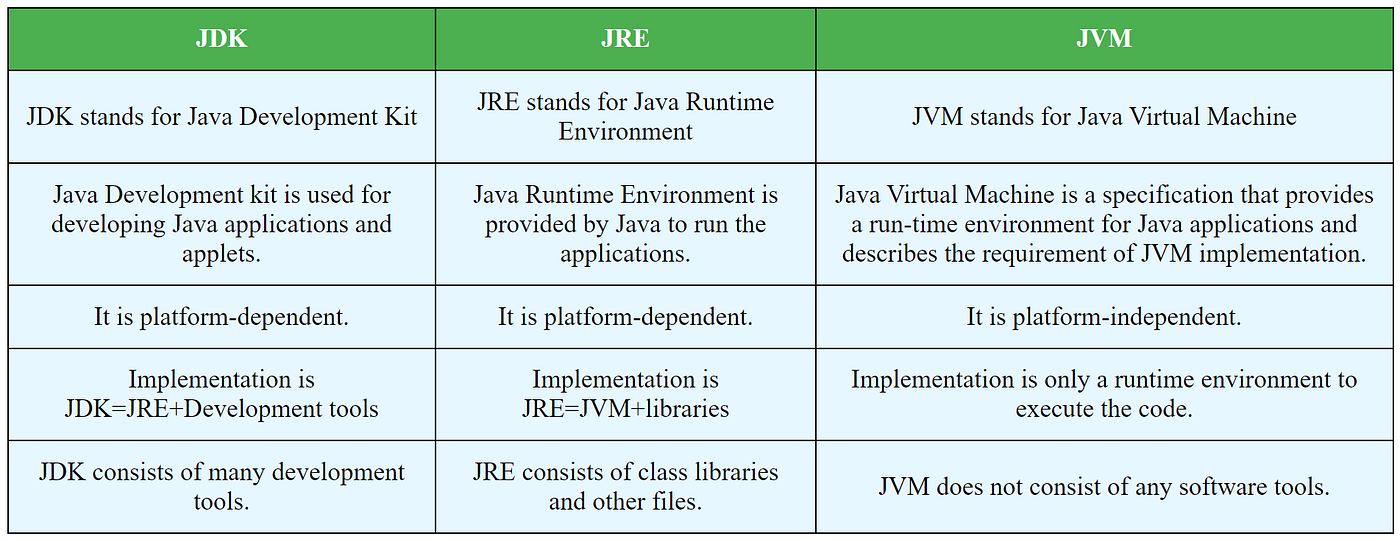

👉 Simple understanding:
- JDK = JRE + Development Tools
- JRE = JVM + Libraries
- JVM = Execution Engine
🔹 Real-Life Analogy
Think of Java like a movie system:
- Java Code → Movie Script
- JDK → Film Studio (creates movie)
- JRE → Media Player
- JVM → Player engine that runs the movie
🔹 Example: Compilation & Execution
public class Test {
    public static void main(String[] args) {
        System.out.println("JVM Example");
    }
}
Execution Steps:
javac Test.java   // Compilation
java Test         // Execution
👉 javac → Converts to bytecode
👉 java → JVM runs it
🔹 Key Differences (Interview Ready)
| Feature | JVM | JRE | JDK |
|---|---|---|---|
| Purpose | Execute code | Run programs | Develop programs |
| Includes | — | JVM | JRE + Tools |
| Usage | Runtime | Runtime | Development |
🔹 Where This Knowledge is Used in Real Projects
Understanding JVM architecture helps in:
- Performance tuning
- Memory optimization
- Debugging production issues
- Microservices scaling
👉 Especially important for:
- Backend Developers
- Java Full Stack Engineers
- DevOps Engineers
🔹 Common Mistakes Beginners Make
❌ Thinking JVM, JRE, JDK are same
❌ Ignoring JVM internals
❌ Not understanding bytecode
❌ Skipping memory concepts
👉 These gaps often cause issues in interviews.
🔹 Why This Topic is Important for Interviews
Almost every Java interview includes:
- Difference between JVM, JRE, JDK
- JVM architecture
- Memory management
- Garbage collection
👉 Mastering this gives you a strong technical foundation.
🔹 Conclusion
JVM, JRE, and JDK form the core architecture of Java.
- JVM → Executes code
- JRE → Provides runtime
- JDK → Enables development
👉 Understanding this is not optional—it’s essential for becoming a strong Java developer.
Comments
Post a Comment